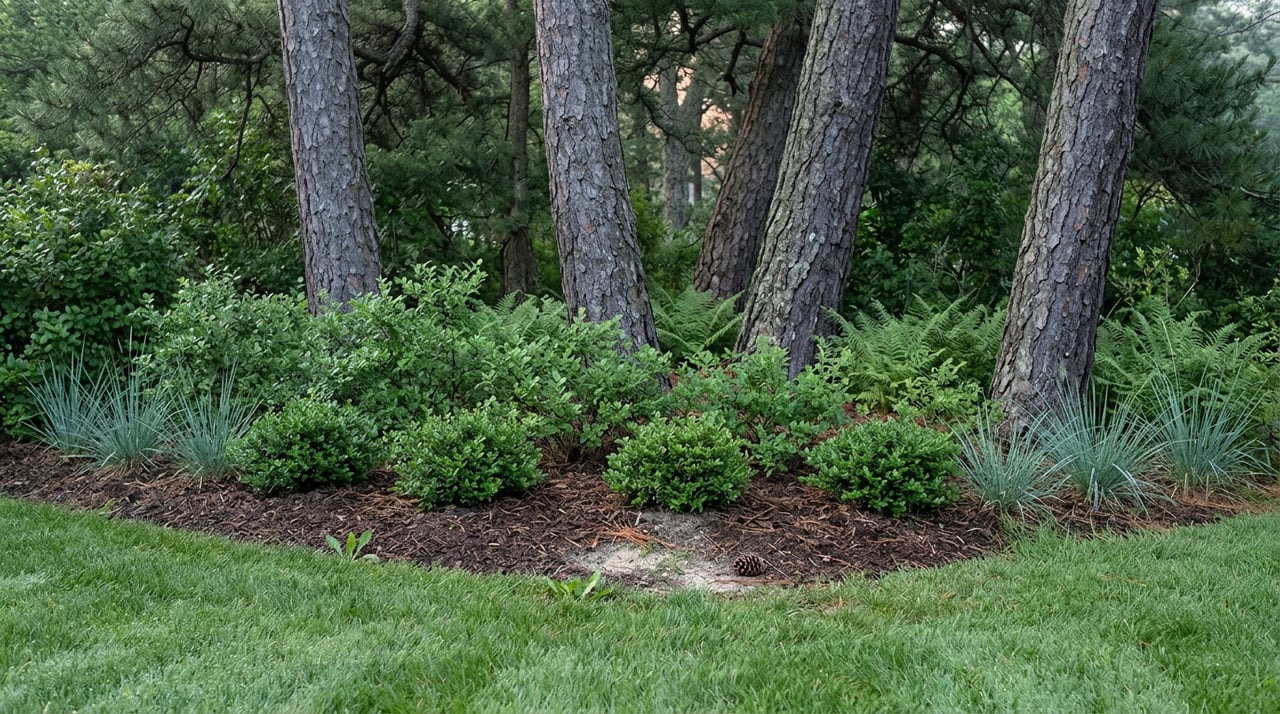
For a stretch of the twentieth century, the pine and scrub oak north of Route 25A were doing serious work. The Radio Corporation of America ran a global communications center on that land, sending and receiving signals for a world that hadn't yet put satellites in orbit. Once satellites took over, the towers had nothing left to say. What's left now is nearly 6,000 acres that New York State manages as the Rocky Point Pine Barrens State Forest, and getting onto it legally requires something RCA never had to bother with: a permit.
If you've lived in Rocky Point for any length of time, you've probably driven past the trailhead signs on Route 25A, Rocky Point Road, or Whiskey Road without giving them much thought. This is the season to give them one. The full trail network, the version without a noon cutoff or a hunting closure hanging over it, has about twelve weeks left before it shuts down for the winter, whether you've gotten around to the permit or not.
A Communications Hub That Went Quiet
The forest's current job is the opposite of its old one. Instead of pushing signals outward, it's now a designated stop on the New York State Birding Trail, a place people drive to specifically because their phones stop working reliably a quarter mile past the parking lot. The sandy pine barrens soil makes for fast, root-free singletrack, and local riders will tell you there's a small joke in the name: there are almost no actual rocks on Rocky Point's trails, just miles of swoopy, sandy single track.
That flip, from the most technologically connected patch of ground on the North Shore to the place locals go to disconnect on purpose, is the whole story here. Everything else, the seasonal rules, the parking lots, the permit, is just the fine print on how to actually use it.
The Season Has an Expiration Date
Most people who ride or hike here assume the trails are open whenever the weather cooperates. They aren't. New York State sets specific windows for bicycling on this property, and the windows tighten twice a year in ways that catch riders off guard.
Right now, in early August, the trails are in their widest-open stretch of the year. Biking is permitted without restriction from June 1 through October 31. Earlier in the year, the rules are stricter: April is open, but May is after-noon riding only, a compromise that exists because spring turkey season overlaps with the trail network. Then, starting November 1, biking stops entirely and stays closed through January 31, because that window covers small game season and the deer shotgun season.
Do the math from today and the full-access season has roughly twelve weeks left. After that, the Main Loop goes quiet for bikes until spring, whether or not you've made it out there this year.
Hikers get a different but related headache. Hiking itself isn't seasonally banned the way biking is, but from November 1 through December 31, and again during the January firearms deer season, access switches from the standard permit to a daily access permit, with reservations required on weekends and holidays. The check-in for that system runs through the Ridge Conservation Area, a few miles down the road, not through the Rocky Point property itself.
Three Entrances, Three Different Rides
The property has three named parking access points, and they don't all lead to the same experience. Riders who show up at the wrong one end up backtracking or missing the loop they wanted.
| Where You Park | What It Reaches | Best For |
|---|---|---|
| Route 25A (Rocky Point) | Main Loop (11.2 miles), optional Westside Loop (3.4 miles) | A full mountain bike day, with Black Diamond loops branching off the Main Loop for advanced riders |
| Rocky Point Road | Bike trail access only | Riders who want the mountain bike network without touching the hiking side |
| Whiskey Road | Horse trails, hiking network | Horseback riders and hikers; this lot has an accessible mounting platform for equestrians |
The Red and Blue hiking trails form their own loop, separate from the mountain bike network, and the two systems are laid out so hikers and bikers mostly don't cross paths on the same tread.
The Permit Nobody Mentions at the Trailhead
Every legal use of this property, biking, hiking, birding, walking the fall woods during deer season, requires a free three-year Managed Land Access Permit. It isn't something you can pick up at a kiosk on your way in. It's issued through the state's nForm system, which means you need a NY.gov account set up ahead of time.
A lot of longtime Rocky Point residents never dealt with this because the permit requirement is newer than their habit of walking or riding the property. If you got your permit years ago, it's worth a quick check on whether the three-year window has lapsed. If you've never gotten one and have just been walking in the way people did for decades before the rule existed, this is the year to fix that, especially with hunting-season enforcement ramping up again in the fall.
What's Waiting for You After the Ride
Trail reviewers consistently flag two things about riding here in summer: ticks are heavy, and downed trees show up on the singletrack more often than you'd expect for a state-managed property. Tuck your socks, check yourself over when you're done, and don't be surprised if a section of trail looks different than it did last month.
Once you're back at the car, Rocky Point rewards you for the effort. Rocky Point Ale House on Broadway runs three-dollar street tacos on Tuesdays, karaoke on Wednesdays, and live music on Friday and Saturday nights, which makes it an easy default for a post-ride dinner that doesn't require a reservation. For something quieter, Sea Basin Restaurant on Route 25A serves Italian and seafood, and Bonita Mexican Steakhouse, also on Route 25A, runs a Latin-inflected steakhouse menu that's become a regular stop for locals who don't want to drive far after a long afternoon in the pines.
The One Thing That Hasn't Changed
Not far from where RCA's towers used to stand, Rocky Point Jewelers has been sizing rings and fixing watches on Rocky Point-Yaphank Road for more than 40 years, a family business that started as a father-son coin shop and turned into something the neighborhood still relies on. The property up the road went from broadcasting to the world to requiring a state permit just to walk through quietly. The jewelry store just kept doing the same work, year after year, regardless of what the town happened to be paying attention to that decade.
That's Rocky Point in one sentence: the technology and the rules around the land keep changing, but the people who actually live here keep showing up for the same things. Donna Neyland has watched this town shift in exactly that way for years without losing what made it worth staying in. If you're curious what that kind of staying power is worth in today's market, Request Your Free Home Valuation whenever you're ready.