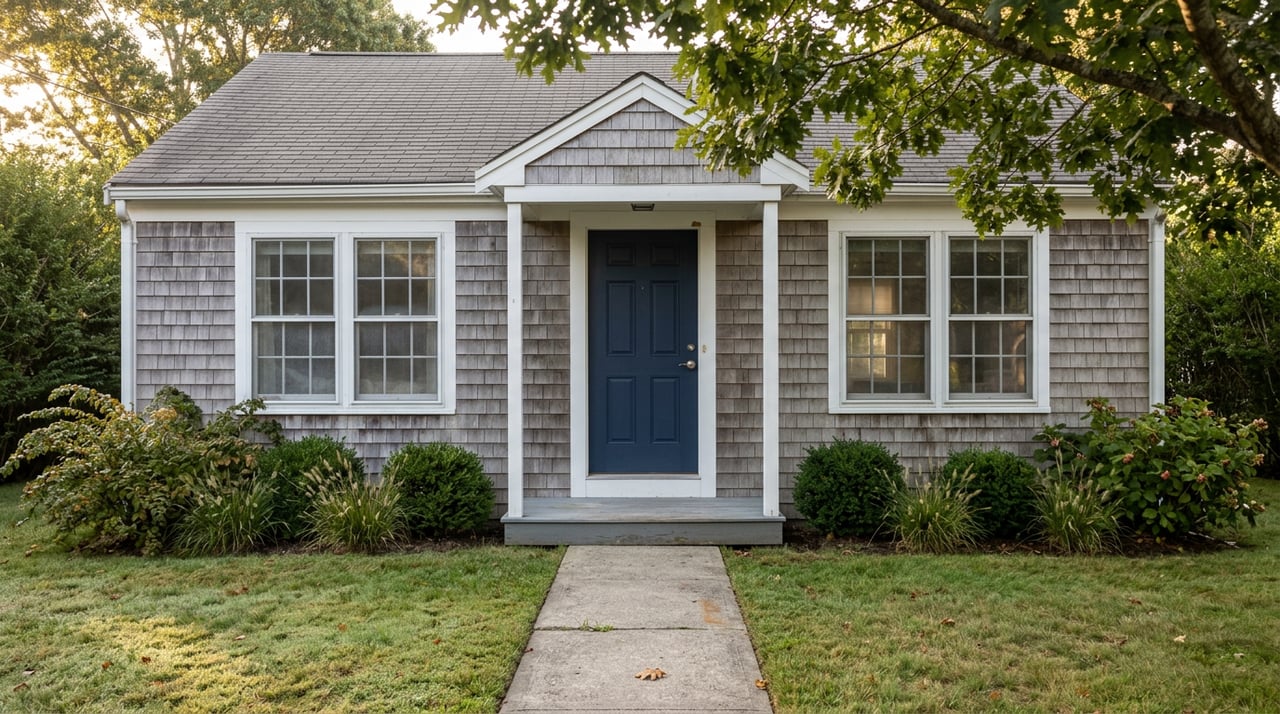
Two houses sit on the same block in Sound Beach. Same builder era, same lot size, same walk to the water. One child gets on a bus that goes to Rocky Point. The other gets on a bus that goes to Miller Place. Neither family chose this. It was decided by which side of an invisible line their address happens to fall on, a line that has nothing to do with the hamlet border most buyers are trying to compare when they type "Sound Beach vs Rocky Point" into a search bar.
That's the real problem with comparing these two North Shore hamlets side by side. The comparison people want to make, cheaper here or more expensive there, better value on this side or that, treats Sound Beach and Rocky Point as two clean, separate boxes. They aren't. Sound Beach has its own internal split that matters more to daily life than the hamlet line does, and the price gap between the two places is explained less by location than most buyers assume.
The Border You're Actually Crossing
Sound Beach was platted in 1929 as a summer bungalow colony, and it never got its own school district. According to Wikipedia's entry on Sound Beach, residents in the eastern two-thirds of the hamlet attend Rocky Point Union Free School District, while the western third feeds into Miller Place Union Free School District. The hamlet's own commercial heart, known locally as "The Square," sits where Sound Beach Boulevard meets New York Avenue, and the district line runs somewhere in the residential grid around it, not along any road a buyer would notice while touring a house.
This means the question "should I buy in Sound Beach or Rocky Point" is often the wrong question. A more useful one is "which district does this specific address feed into." Two homes a few doors apart, both technically in Sound Beach, can belong to entirely different K-12 systems. Buyers who assume the whole hamlet shares one district sometimes find out only after they've written an offer, or after closing, which side of the line their new house sits on.
What the Median Price Is Actually Measuring
Here's where the comparison gets more interesting than a simple "which town is cheaper" answer.
Over the three months ending in May 2026, Sound Beach homes sold at a median price of $485,000, moving in about 21 days on average. Rocky Point homes sold at a median of $519,000 over the same window, taking closer to 34 days to sell. On the surface, that reads like a straightforward story: Rocky Point costs more, and it's worth the wait.
But price per square foot tells a different story. Rocky Point's median sale price per square foot sat at $362 over that period, up 8.1 percent year over year, meaning the increase in Rocky Point's value has been concentrated in what buyers pay for each foot of house, not just in bigger houses trading hands. Sound Beach, meanwhile, runs noticeably smaller than the rest of the county. The typical home there measures somewhere in the 1,680 to 1,790 square foot range, compared to a county average closer to 2,600 to 2,660 square feet. That's not a small gap. It's a house that's roughly a third smaller than what's typical elsewhere in Suffolk County.
| Sound Beach | Rocky Point | |
|---|---|---|
| Median sale price (3 mo. ending May 2026) | $485,000 | $519,000 |
| Median days on market | 21 | 34 |
| Median price per square foot (sold) | not separately reported | $362 (up 8.1% YoY) |
| Typical home size | ~1,680-1,790 sq ft | closer to county average |
Put those together and a different explanation emerges. Sound Beach isn't cheaper because it's less desirable. It's cheaper in aggregate because the housing stock itself runs smaller, a legacy of its bungalow-colony origins. A buyer comparing the two hamlets purely on median price is really comparing house size dressed up as location value. The more useful comparison is dollars per square foot, and on that measure, the gap between the two hamlets narrows considerably. It also explains the days-on-market gap in the other direction: smaller, lower-priced homes in Sound Beach tend to move faster simply because more buyers can afford to act on them quickly, not because the hamlet itself commands more urgency than its neighbor.
The Second Line: Who Actually Gets to the Water
Waterfront lifestyle is a big part of what draws people to this stretch of the North Shore, but "near the water" and "able to walk onto the water" are not the same thing here, and that distinction rarely shows up on a listing sheet.
Much of the beachfront along this part of Long Island Sound is controlled by private property owners associations rather than the town. In Rocky Point, the North Shore Beach Property Owners Association owns and operates several beach access points, including ramps at locations like Hallock Landing, along with a clubhouse of its own. Sound Beach has its own separate Property Owners Association managing private beach access, parkland, and a clubhouse of its own. Membership, not proximity, determines who gets through the gate.
This isn't a hypothetical inconvenience. In 2024, TBR News Media reported that some Rocky Point homeowners on the bluff were being charged as much as $3,800 by the association just to access their own beach for bulkhead repairs, on top of regular membership dues. The dispute also revealed a patchwork of jurisdiction: some ramps belong to the association, some are town right-of-way with public access up to the mean high tide line, and confusion between the two had led to real confrontations between residents and private security.
For a buyer weighing "waterfront lifestyle," this matters more than the phrase "close to the beach" in a listing description. The real questions are whether a specific address includes association membership, what the annual dues run, whether there's a separate assessment history, and which physical access point that membership actually unlocks. None of that appears in a median price. All of it appears on a closing statement, sometimes for the first time.
What This Actually Means for a Buyer Comparing the Two
If you're deciding between a house in Sound Beach and one in Rocky Point, the hamlet name on the listing is the least useful piece of information you have. What actually determines your experience and your long-term cost of ownership is narrower and more specific:
- Which school district that exact address feeds into, since Sound Beach itself splits between Rocky Point UFSD and Miller Place UFSD
- Whether the property includes membership in a private beach association, and what the current dues and any special assessments look like
- Price per square foot rather than median sale price, since Sound Beach's smaller average home size skews the headline number
- Days on market in context, since a faster sale in Sound Beach likely reflects a lower price point drawing more buyers, not necessarily stronger demand for the hamlet itself
None of these show up in a portal search. All of them show up in a district boundary map, an association's membership rules, and a house-by-house comparison that a median can't give you.
A Few Questions Buyers Ask
Does every house in Sound Beach have beach access? No. Access typically runs through private property owners associations rather than automatic inclusion with a home purchase, so it's worth confirming membership status and dues directly for any specific address.
How do I find out which school district a Sound Beach address is zoned for? The district line runs through the hamlet itself, splitting roughly along an east-west boundary, with the eastern two-thirds in Rocky Point UFSD and the western third in Miller Place UFSD. Confirming this for a specific street should happen before you get attached to a house, not after.
Is Rocky Point actually more expensive than Sound Beach, or does it just look that way? Based on sale data for the three months ending May 2026, Rocky Point's median sale price was higher, but its price per square foot was also higher and still climbing. Sound Beach's lower median reflects smaller average home sizes as much as it reflects location.
Numbers like these change with every closing, and the line that matters for your specific address won't show up on any aggregator. If you're weighing a move between Sound Beach, Rocky Point, or anywhere else on the North Shore, Donna Neyland can walk you through what a specific street, a specific school assignment, and a specific beach membership actually mean for your budget. Request Your Free Home Valuation and get a number that reflects the block you're actually buying on, not the hamlet average.