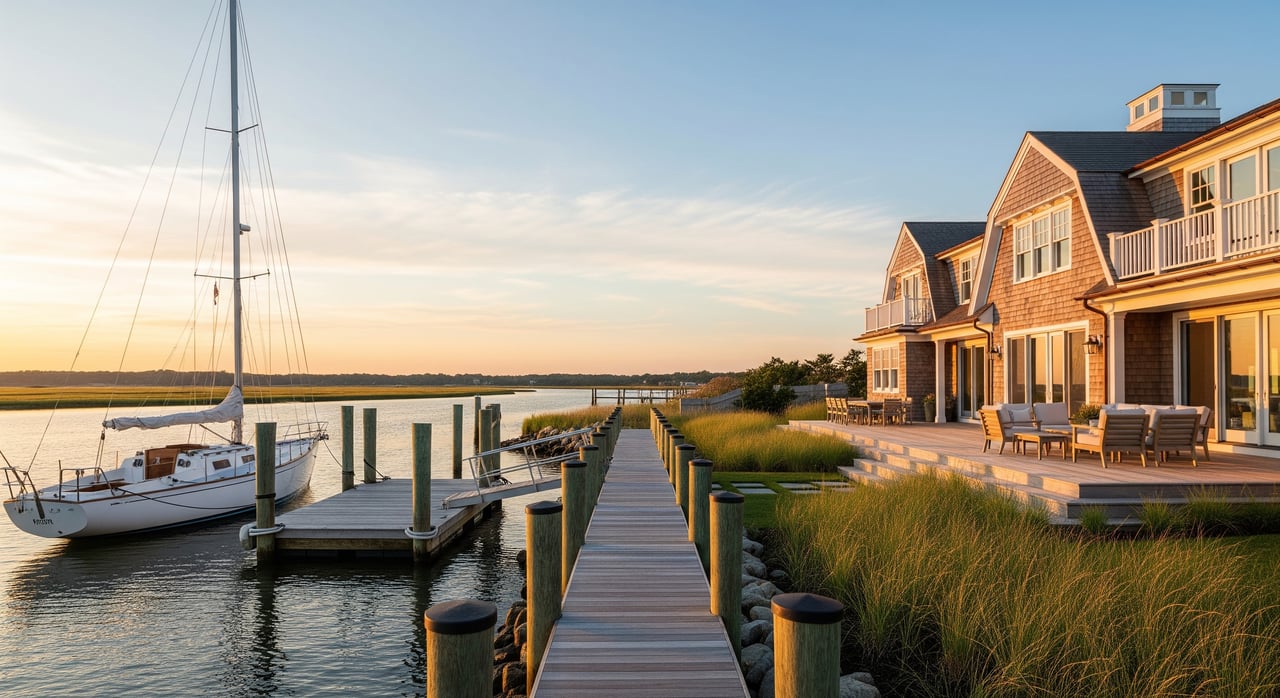
Thinking about trading city noise for the sound of waves on Long Island’s North Shore? If you’re moving to Wading River from NYC, western Suffolk, or out of state, you likely want more space and a slower pace without losing essential services. In this guide, you’ll learn what to expect from homes, costs, commutes, schools, and coastal living, plus how to plan a smart scouting trip. Let’s dive in.
Why Wading River
Wading River is a small hamlet on the Long Island Sound in northeastern Suffolk County. It sits within the Town of Riverhead near the Brookhaven boundary and offers a quieter, low‑density feel compared to western North Shore villages. You’ll find mostly residential streets, larger lots, and a coastal setting that draws families and professionals who want suburban living with North Shore amenities.
Local shops and restaurants cover basics, while broader retail, services, and hospitals are a short drive away in Riverhead, Stony Brook, Port Jefferson, or Smithtown.
Housing types and prices
You’ll see a range of single‑family homes:
- Older postwar ranches, split‑levels, Capes, and Colonials.
- Infill and custom new builds, often on larger, wooded lots.
- Waterfront and estate properties on the Sound or creeks, sometimes with private docks.
Price expectations vary with the market, but general bands can help you plan:
- Entry, non‑waterfront homes: lower to mid six figures.
- Typical 3–4 bedroom homes in move‑in condition: mid six figures to low seven figures.
- Waterfront and newer luxury builds: often seven figures, with a premium for direct Sound frontage.
Property taxes in Suffolk County are a meaningful part of ownership. Expect several thousand dollars per year for many single‑family homes, with higher bills for higher‑value properties. Heating fuel differs by house, and many homes use oil. Electricity is supplied by LIPA. Your heating type and a home’s energy efficiency will affect monthly costs.
Water, sewer, and environmental factors
- Water: Many properties connect to the Suffolk County Water Authority, but service can vary by parcel. Confirm for each address.
- Sewer: Large parts of Wading River rely on septic systems rather than municipal sewer. Septic condition, permits, and replacement costs should be part of your due diligence.
- Flood and coastal risk: Some areas fall within FEMA flood zones, especially near the Sound or creeks. A lender may require flood insurance, and coastal erosion and sea‑level rise are long‑term considerations. Ask for flood maps and an elevation certificate when applicable.
- Underground oil tanks: Older homes on Long Island sometimes have buried tanks. Check for current or abandoned tanks and request documentation.
Getting around
Rail
Wading River does not have an active LIRR station. Your closest options are:
- Riverhead on the Greenport branch, about a 10 to 20 minute drive depending on where you live.
- Ronkonkoma on the Main/Ronkonkoma branch, a major commuter hub roughly 20 to 40 minutes by car.
From Riverhead or Ronkonkoma, plan for about 1.5 to 2+ hours into Manhattan depending on the train and transfers. Many commuters drive to Ronkonkoma for faster, electrified service.
Driving
Under good traffic, the drive to Manhattan is about 1.5 to 2 hours. Congestion on the Long Island Expressway can extend that time, especially during peak hours. Local travel relies on NY‑25 and county roads, with I‑495 access to the south. On‑site parking is common in residential areas, and LIRR commuter lots can fill early.
Bus and rides
Suffolk County Transit provides local routes, though schedules and frequencies vary. Express bus options to NYC are limited on the North Shore, so most commuters use the LIRR or drive.
Daily life essentials
Schools
Most of Wading River is served by the Shoreham‑Wading River Central School District, which includes elementary, middle, and high schools. For current performance data, graduation rates, and programs, review New York State Education Department report cards and the district’s official resources.
Healthcare
You are within driving distance of Peconic Bay Medical Center in the Riverhead area and Stony Brook University Hospital in Stony Brook. For emergency and specialist care, plan to travel to Riverhead or Stony Brook.
Shopping and services
You’ll find local grocery options, pharmacies, and dining in and near Wading River. For big‑box retail and wider selections, many residents head to Riverhead, Smithtown, or Stony Brook. Professional services, including banks and legal offices, are readily available in nearby towns.
Recreation and lifestyle
Wading River’s coastal setting offers beaches and public access to the Sound. Nearby Wildwood State Park is a highlight for camping, trails, and waterfront views. Boating, fishing, and kayaking are common, supported by local marinas and launches. Vineyards and East End agri‑tourism are close enough for easy weekend trips. Local restaurants and seasonal waterfront dining add to the small‑town coastal feel, while broader nightlife can be found in Port Jefferson, Stony Brook, and Riverhead.
Scouting trip game plan
Before you visit
- Pull current MLS listings in Wading River and nearby hamlets that match your price and bedroom needs.
- Map your likely commute route, including drive times to Riverhead or Ronkonkoma stations.
- Check school boundary maps, municipal water and sewer status, and flood zone for each property.
- Line up a local agent who knows Wading River to arrange showings and address septic, oil tank history, and permits.
- Confirm internet and cell coverage for specific addresses, including Spectrum and Verizon Fios availability.
During a 1–2 day visit
- Drive neighborhoods at different times to gauge traffic, noise, and activity.
- Test your commute, including station parking at Riverhead or Ronkonkoma.
- Visit parks, beaches, and Wildwood State Park to confirm lifestyle fit.
- For any homes you tour, ask for septic records, well reports or water connection confirmation, heating fuel type, oil tank disclosures, renovation details, and permit history.
- Observe lot drainage, tree cover, and proximity to the Sound or creeks.
Due diligence once under contract
- Order a septic inspection and confirm any required health department permits.
- Verify municipal water connection or order well water tests.
- Pull FEMA flood maps and request an elevation certificate if the home is in a flood zone.
- Conduct an oil tank survey and environmental review.
- Review the property tax bill and assessment history.
- Complete a title search and survey to confirm boundaries, easements, and any dock rights.
- Schedule a home inspection with attention to coastal factors like salt‑air corrosion, roof age, HVAC, moisture, and foundation.
- Get early quotes for homeowners and flood insurance, since coastal premiums can run higher.
Tips for remote workers and relocators
- Confirm broadband options at the address. Coverage can vary by street, so verify provider speed and reliability before you commit.
- Budget for operating costs. Property taxes, heating fuel, and electricity can vary widely by home, so model annual numbers.
- Plan for coastal risk. If a property sits in a flood zone, factor in insurance costs and potential mitigation.
- Think about resale. Proximity to commuter routes and stations, flood zone status, and school district boundaries all influence marketability over time.
Work with a local advocate
A move to Wading River comes with unique coastal, utility, and commute questions. You deserve a guide who already knows the answers. With deep experience across Suffolk County’s North Shore and a track record of smooth transactions, Donna provides buyer representation, relocation support, pricing insight, and steady negotiation through closing. From septic and flood due diligence to station parking tips and local contractor referrals, you get clear steps and fewer surprises.
Ready to explore Wading River with a trusted local? Connect with Donna Neyland to start your move with confidence.
FAQs
How long is the commute from Wading River to Manhattan?
- Expect about 1.5 to 2+ hours by LIRR from Riverhead or Ronkonkoma, or 1.5 to 2 hours by car in good traffic.
Which school district serves Wading River?
- Much of the hamlet is served by the Shoreham‑Wading River Central School District, which operates elementary, middle, and high schools.
Do most Wading River homes have sewer or septic?
- Many properties rely on septic systems rather than municipal sewer, so confirm the setup and system condition for each address.
What are typical home price ranges in Wading River?
- Entry non‑waterfront homes often fall in the lower to mid six figures, typical family homes in the mid six figures to low seven figures, and waterfront can exceed seven figures.
Is flood insurance required for waterfront homes in Wading River?
- If a property lies in a FEMA flood zone and you have a mortgage, your lender will likely require flood insurance, so verify maps and request an elevation certificate.
What hospitals serve Wading River residents?
- Peconic Bay Medical Center in the Riverhead area and Stony Brook University Hospital in Stony Brook are the nearest regional hospitals.
Are property taxes high in Wading River?
- Suffolk County property taxes are a significant cost and commonly run several thousand dollars per year, increasing with higher‑value properties.